Patina AI · Inventory
Every watch, its cost, and its next move.
Patina AI keeps each watch, its acquisition record, additional costs, current state, and market context connected—so the next decision starts from a complete operating record.
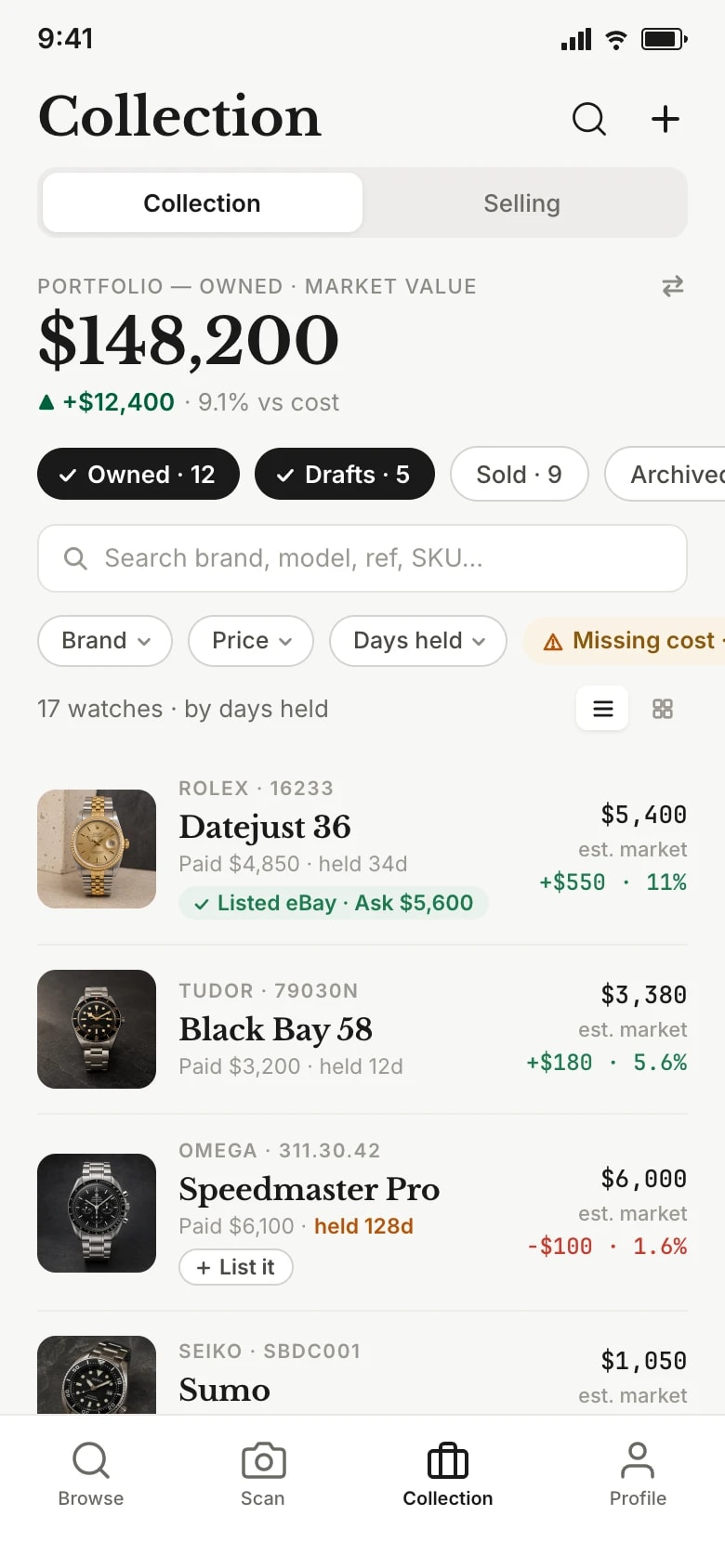
Organize the collection around what happens next.
Owned, Draft, Listed, Sold, and Archived states make each watch’s position explicit in the collection. Filters and list or grid views surface the relevant working set without turning the collection into an undifferentiated gallery, so the next piece of work is easy to find.
- Separate owned watches from records still being prepared
- Distinguish active listings from completed sales
- Archive records without losing their operating history
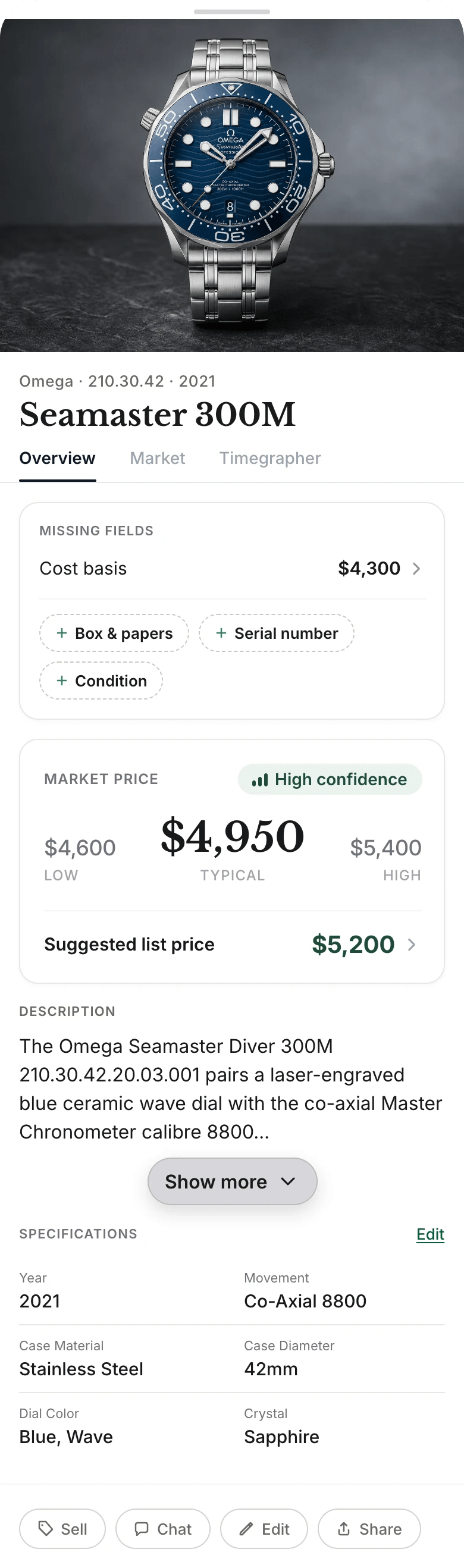
Keep the details that make a watch actionable.
A watch record brings reference details, purchase information, photos, and current market context into one place. Missing-field prompts call out incomplete acquisition or selling inputs before those gaps distort a later listing or performance review, keeping the operating record ready for its next step.
- Keep purchase date, source, and price with the watch
- Spot missing fields before the record moves forward
- Preserve specifications and current context together
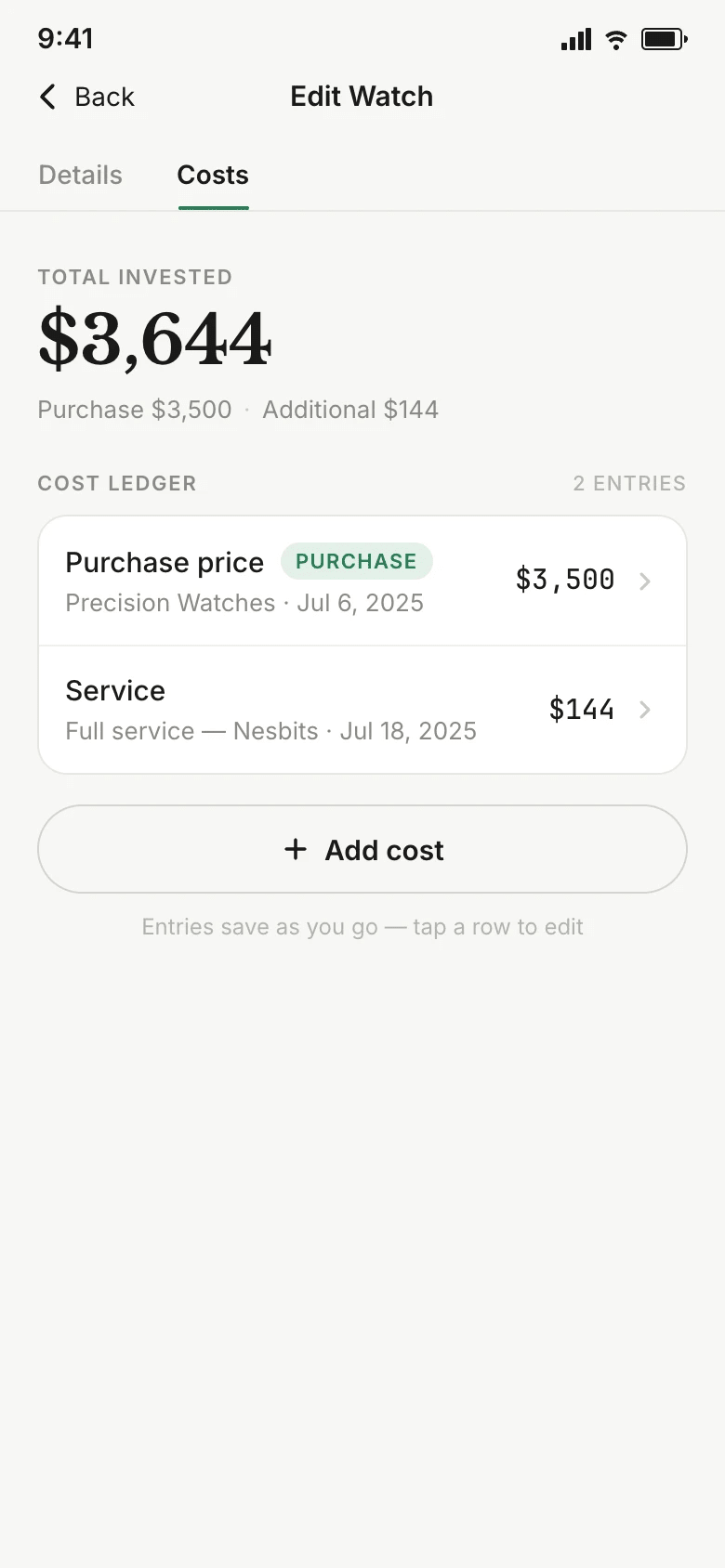
Track every cost that follows the purchase.
The cost ledger lets acquisition price, service, parts, shipping, and other recorded costs accumulate against the same watch. That fuller invested amount provides a more useful foundation for a listing decision than purchase price alone, without predicting the eventual result.
- Record dated costs with a clear category and note
- Review total invested before setting a sale target
- Keep cost assumptions visible and correctable
Connect acquisition to outcome.
Inventory acts as the connective record between a buy decision, listing preparation, sale detail, and analytics. Instead of re-entering the watch at each stage, the same facts and costs travel forward while each new event adds its own evidence and keeps the operating history intact.
Inventory, in practice.
The product supports your judgment with connected records and context. Open any question for the practical answer.
How does inventory keep the workflow connected?
Inventory keeps the watch record, lifecycle state, acquisition details, later costs, market context, and selling activity connected from the initial buy through a completed sale.
Which watch states are included?
Owned, Draft, Listed, Sold, and Archived states give each watch record a clear current position in the lifecycle.
Why do additional costs belong on the watch record?
Service, parts, shipping, and other costs change the capital invested in a watch. Keeping them with the record makes later listing and performance decisions more grounded.
The next watch starts here
Keep the next watch decision connected.
Bring Patina AI to the watch in front of you, then carry the context into the next step of the workflow.