Patina AI · For dealers
Run the watch business from one desk—and from wherever the deal happens.
A dealer’s day is split between the desk and the deal. Patina AI’s Dealer OS keeps inventory, active selling work, orders, costs, and the performance signals that inform the next move on the web, and the iPhone app brings the same records to the acquisition.
Set the acquisition boundary before the negotiation starts.
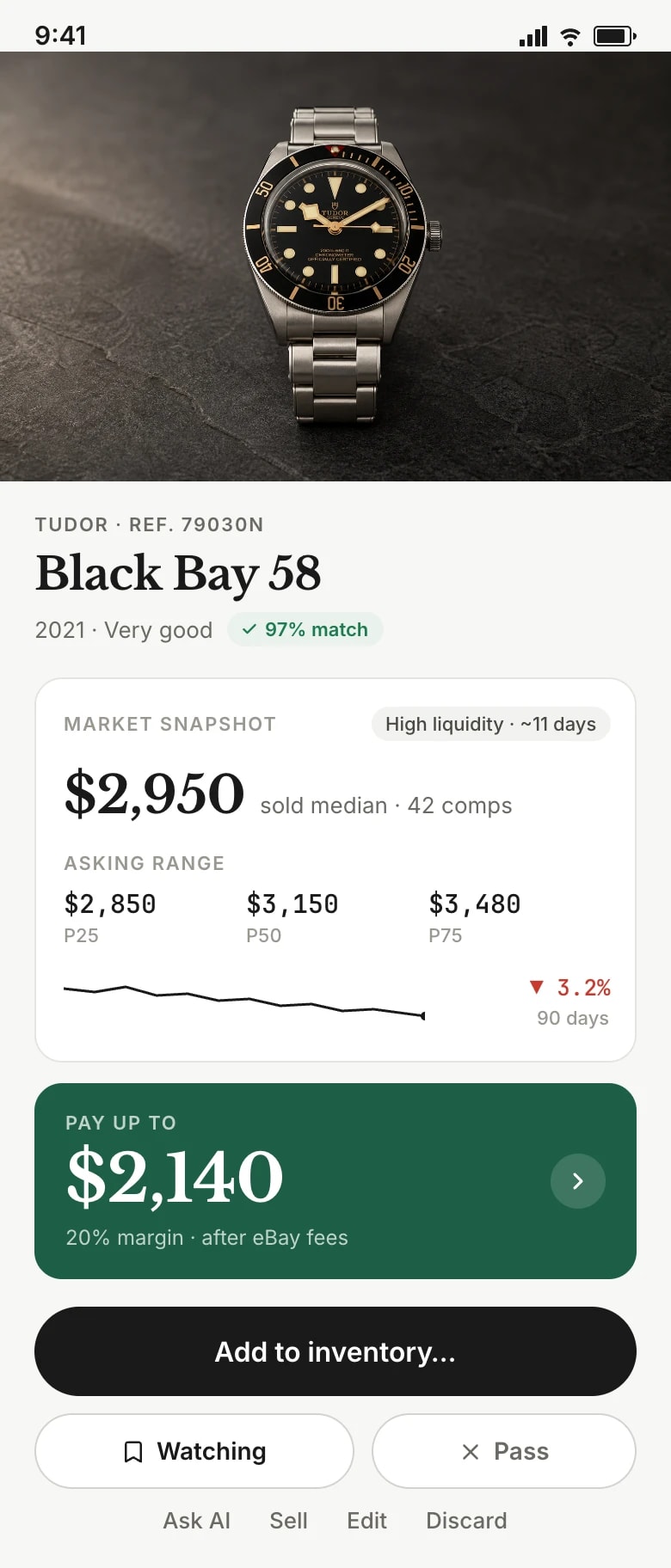
A watch arriving in a travel roll is not yet a deal. On the iPhone app, start with a clear dial and case capture, inspect the proposed identity, and place the seller’s ask beside the visible market range. Then work backward from a credible sale target, expected costs, and the margin the acquisition must leave. The maximum-buy view keeps those assumptions visible while the conversation is still happening; it does not authenticate the watch or remove the need to inspect condition, serials, movement, and provenance.
- Review the proposed reference before discussing value
- Separate the seller’s ask from broader market context
- Revise the buy ceiling when condition or costs change
Keep one inventory record tied to what the buy required.
Back at the desk, the accepted acquisition is already a row in the Dealer OS inventory table. Its purchase price and later service entries accumulate in one cost ledger, and the watch panel puts cost basis beside estimated market value, unrealized P&L, and days held. Each ledger row keeps its category, source, date, and note available for review, so the capital behind a watch is inspectable before the next price or selling decision.
- Review total invested from purchase and service costs
- Keep dated ledger entries on the same watch
- Check additional costs before setting the next price

Move from known watch details to an active selling decision.
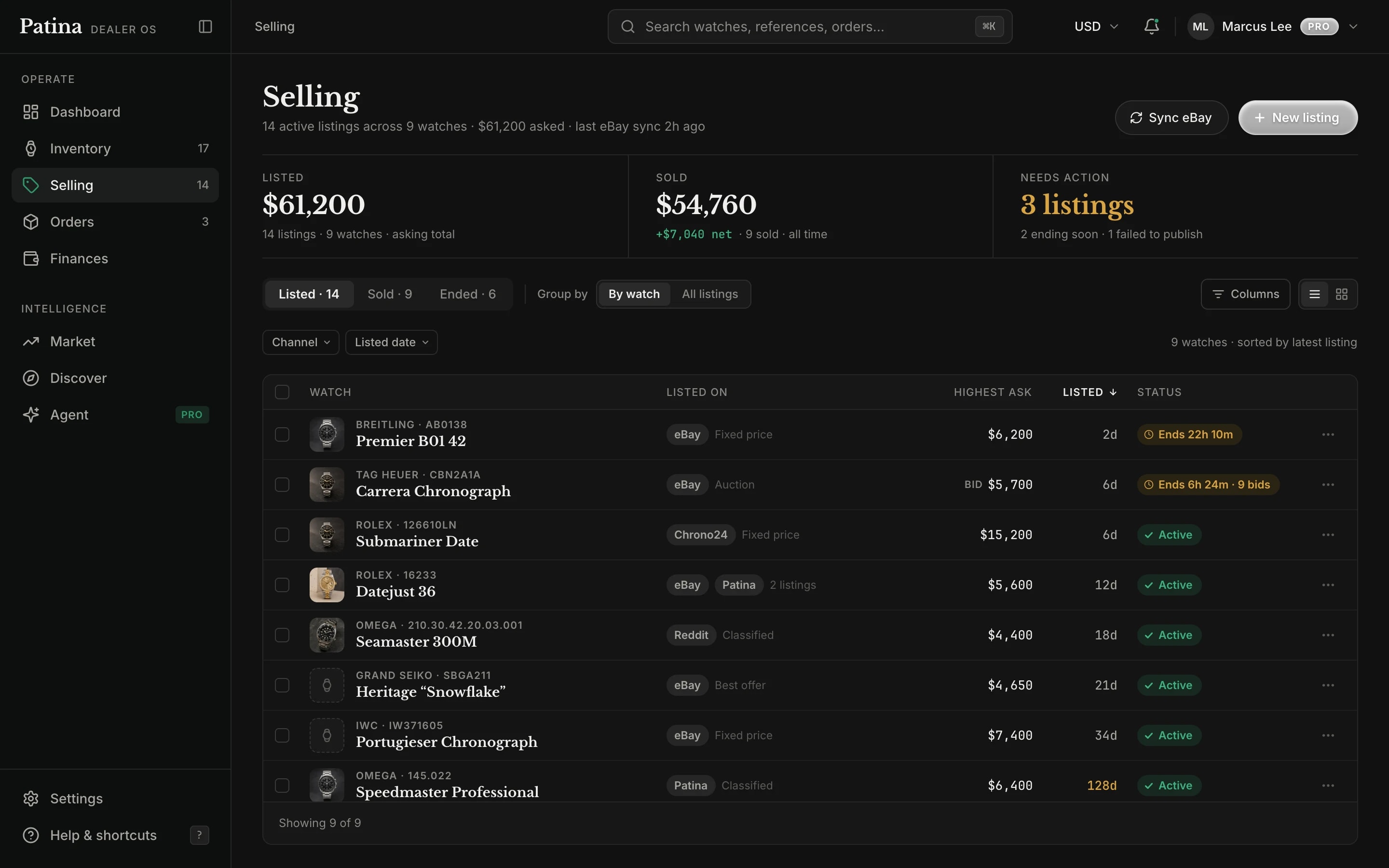
Open the selling view on the web instead of reconstructing the story from memory. Each watch shows where it is listed, what it is asking, and what needs action. Check the reference details, condition notes, included items, channel state, price, and offer controls against the physical watch and the economics established at acquisition. Patina AI can help prepare the listing language, but the dealer remains responsible for the accuracy of every buyer-facing claim and for deciding when an offer still leaves enough room after recorded costs.
- Verify every carried-forward detail against the watch
- Keep channel state and offer controls in view
- Return to the deal assumptions before accepting less
Trace the day back to its watch records.
Analytics places the net result beside recorded sales, then opens the supporting view into capital, aging inventory, deal records, and operating costs, on the desk or on the phone. Its purpose is to make the result explainable: what sold, what remains held, and which recorded costs shaped the period. The overview explains recorded activity; it does not predict a sale, margin, or future business result.
- Review net result beside the sales behind it
- Inspect capital and aging by operating record
- Compare deal outcomes with operating costs

For dealers, in practice.
The product supports your judgment with connected records and context. Open any question for the practical answer.
How should a dealer use Patina AI during acquisition?
Use the scan, identification candidate, market context, and buy model to organize the questions behind an offer. Confirm the watch’s identity, condition, movement, serials, and provenance with appropriate physical inspection before committing capital.
How does the dealer workflow stay connected?
Scan, market context, inventory and cost records, active listing management, completed-sale details, analytics, and watch health all stay tied to the watch record as the work moves forward.
Can the active listing view decide which offer to accept?
No. It keeps listing price, offer controls, channel state, and watch details together so you can judge the offer against acquisition assumptions and costs. The acceptance decision remains yours.
What does analytics add after a sale?
It connects sales with invested capital, inventory age, deal records, operating costs, and the resulting net outcome. It explains recorded inputs rather than predicting future performance.
Keep the decision moving
Bring Patina AI to the next watch in front of you.
Start with the evidence available now, keep your assumptions visible, and carry the watch’s context into the next decision.