Patina AI · For collectors
Understand the watch before it becomes part of the collection.
Collection decisions begin before ownership. Patina AI helps a collector examine an identification candidate, read market context, revisit an owned watch, organize its record, and preserve movement-health readings.
Turn the dial in front of you into questions you can inspect.
Begin identification with a sharp view of the dial and case, then treat the proposed model and reference as a candidate to examine rather than a final answer. Read the visible specifications and confidence, note anything that conflicts with the seller’s description, and decide which physical details still need attention. Patina AI organizes identification evidence, but it does not authenticate a watch or replace movement, serial, provenance, and condition review by a qualified professional.
- Capture legible dial, case, and reference cues
- Challenge conflicting specifications before valuation
- Carry unresolved identity questions into inspection
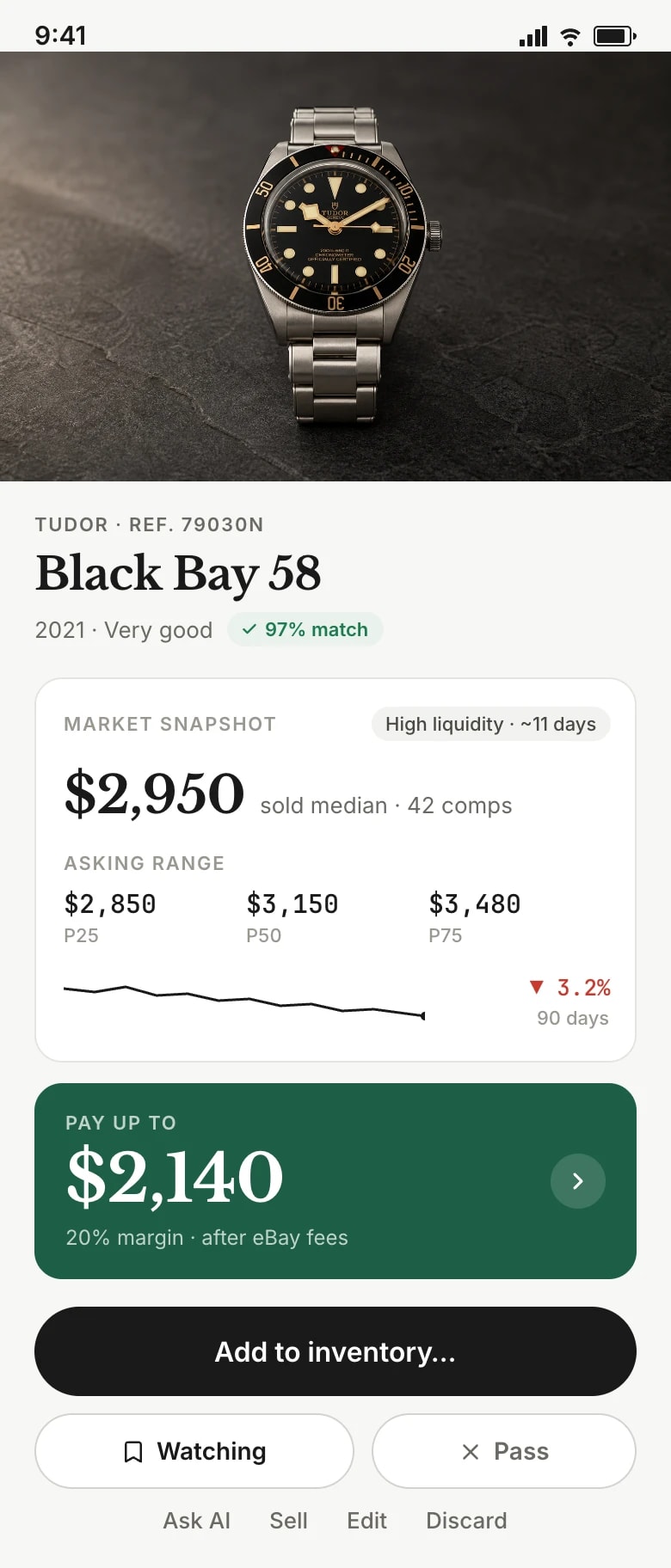
Read today’s market without letting it erase the watch’s history.
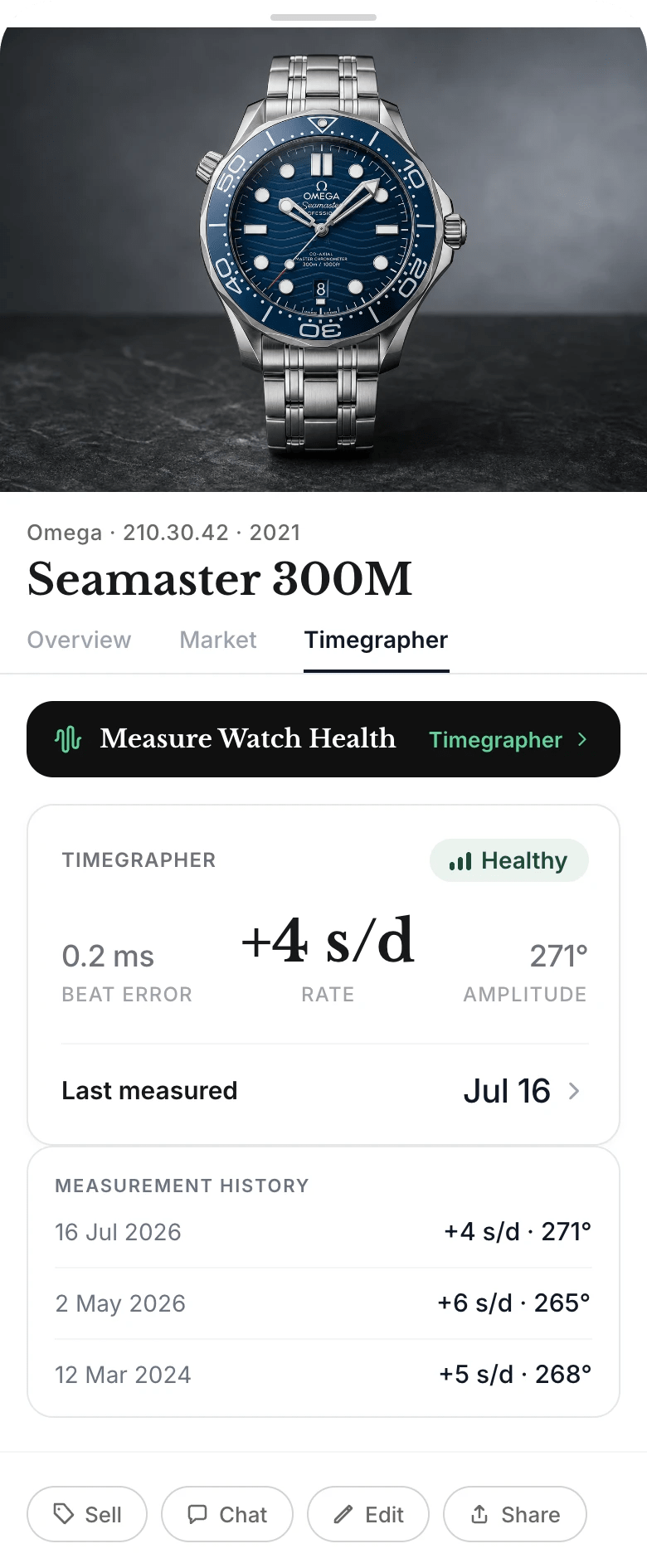
Place the current market range, confidence, and condition-sensitive context beside the owned-watch record. Purchase facts and missing details explain what is known about your example; the market view describes the outside context around it. Keeping those ideas separate helps you decide whether to hold, inspect further, or prepare a sale without treating one asking price or one market signal as a universal value.
- Read low, typical, and high context as a range
- Keep purchase facts distinct from current market signals
- Resolve missing details before choosing the next step
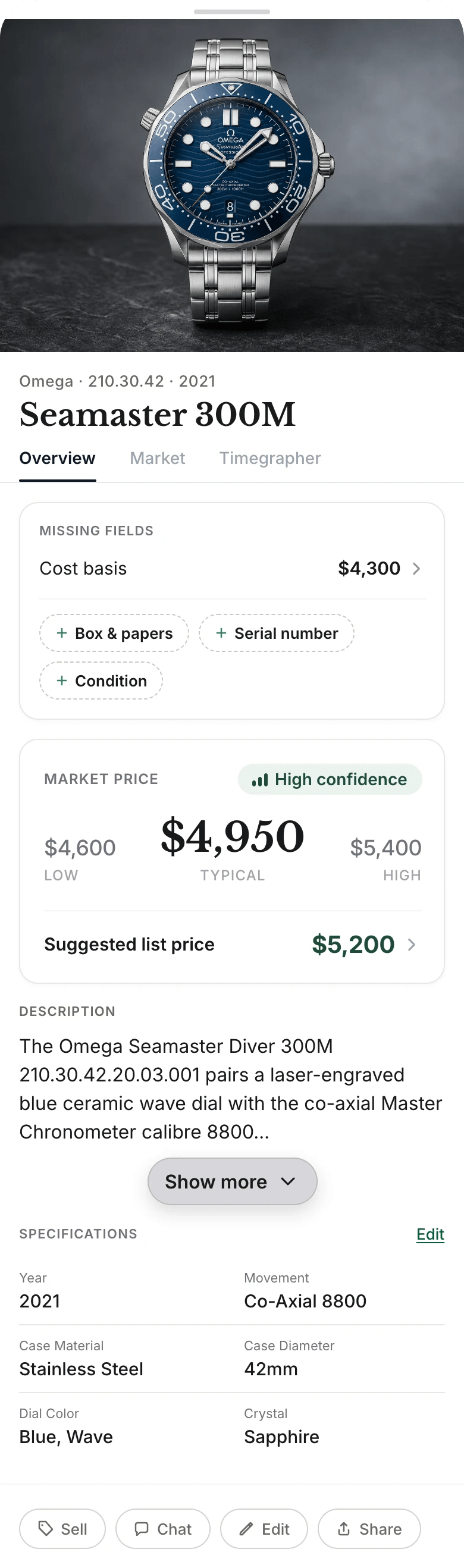
Organize collection records around the next decision.
Explicit states, focused filters, and watch rows organize the collection around current work. Each visible row places the watch identity beside paid amount, time held, estimated market context, and listing state, making the next record to inspect easier to find while preserving the history behind the watch’s current position.
- Use owned, draft, sold, and archived states
- Filter by price, age, and missing costs
- Review paid, held, and market context in watch rows
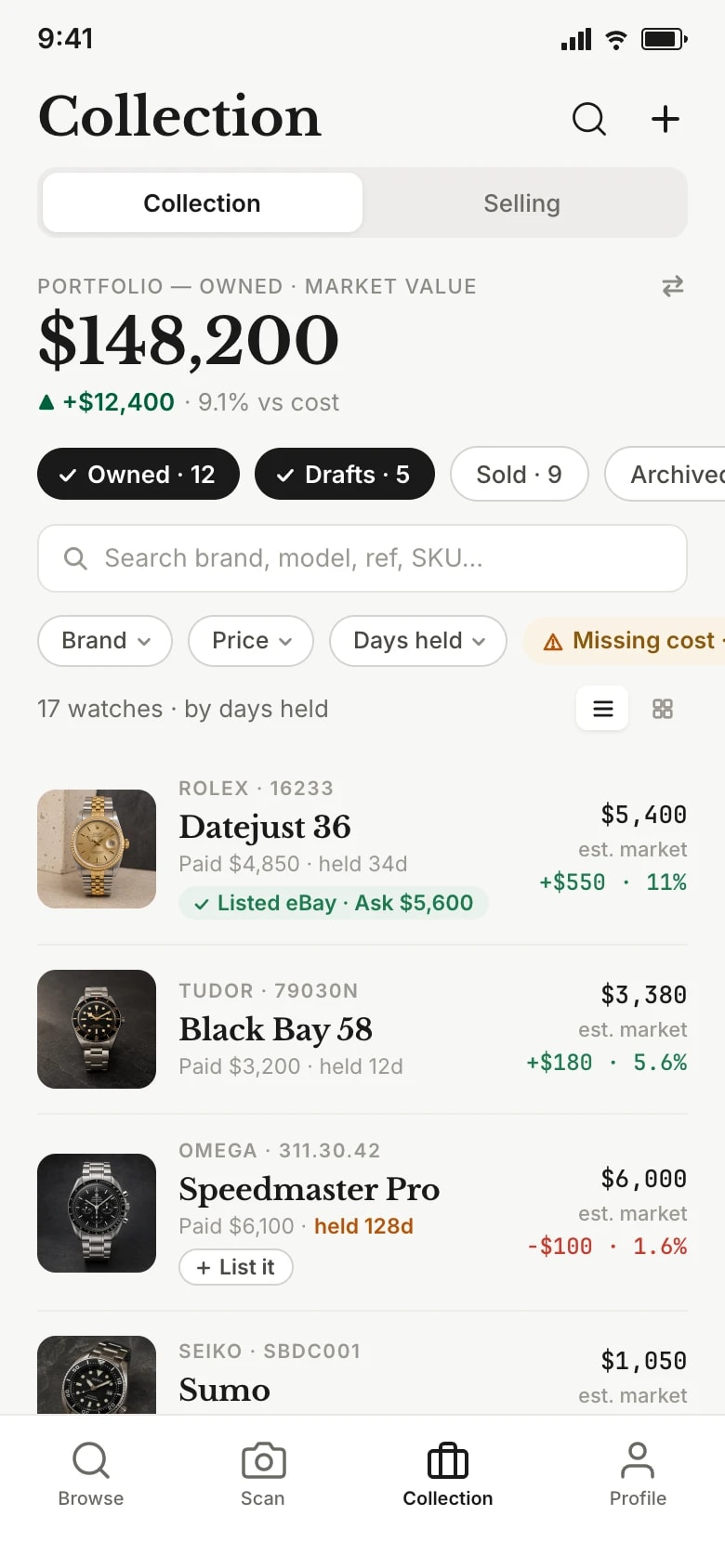
Add movement health to the record without mistaking it for diagnosis.
Use the phone microphone in a quiet setting to capture rate, amplitude, and beat error, then review the reading beside earlier captures when consistent conditions make that history useful. A change can prompt a better question about placement, wind state, or service needs, but the measurement is not a professional service diagnosis. A watchmaker’s inspection remains the right next step when condition or movement behavior needs expert judgment.
- Capture readings under repeatable conditions
- Review rate, amplitude, and beat error together
- Take service questions to a watchmaker
For collectors, in practice.
The product supports your judgment with connected records and context. Open any question for the practical answer.
Does Patina AI authenticate a watch for a collector?
No. It proposes an identification and organizes visible details and market context. Authentication still requires appropriate inspection of the physical watch, movement, serials, provenance, and condition.
How should market context affect a collection decision?
Use the range, confidence, liquidity, condition, and completeness as separate inputs. They can clarify the questions around an acquisition or sale, but they do not establish one fixed value for every example.
How do collection and cost-ledger records stay connected?
Inventory keeps ownership facts, acquisition details, later costs, lifecycle state, and market context attached to the same watch record as the collection changes.
What can a watch-health reading tell me?
It estimates rate, amplitude, and beat error from captured movement audio and keeps readings available for later review. It is context for a service conversation, not a professional diagnosis.
Keep the decision moving
Bring Patina AI to the next watch in front of you.
Start with the evidence available now, keep your assumptions visible, and carry the watch’s context into the next decision.